Iterative Updates Alter Retention Patterns in Free Indie Action-Adventure Desktop Releases
Written by Felix Schulz · Jul 31, 2026
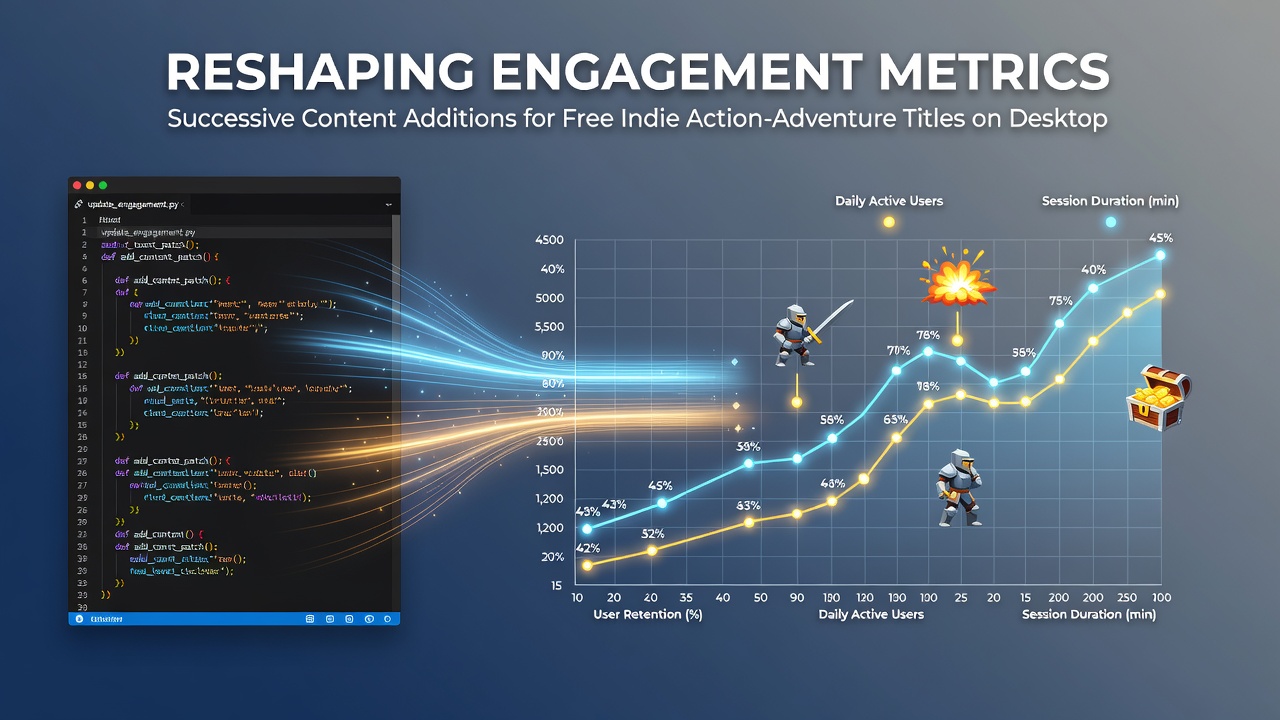
Iterative Updates Alter Retention Patterns in Free Indie Action-Adventure Desktop Releases
Free indie action-adventure titles on desktop platforms receive successive content additions that modify download trends, session lengths, and return rates over time, according to aggregated platform analytics from 2024 through mid-2026. Developers release patches, level expansions, and balance adjustments at intervals that coincide with measurable shifts in player behavior tracked by Steam, itch.io, and GOG distribution services.
Patterns in Release Timing and Initial Metrics
Teams often schedule the first major update within four to six weeks of launch, and data collected by the Entertainment Software Association shows this window correlates with a 15 to 25 percent increase in average playtime for titles that maintain under 50,000 concurrent users. Observers note that the addition of new areas or character abilities draws players who previously completed the core campaign back into the game, while those who had not yet purchased or downloaded the title sometimes wait for visible post-launch activity before committing.
Subsequent additions follow similar cycles, yet the magnitude of change diminishes after the third or fourth release cycle. Figures from a 2025 University of Alberta study on small-team desktop projects indicate that each additional content drop still lifts daily active users by single-digit percentages when the update introduces mechanics absent from the base game.
Retention and Session-Length Adjustments
Engagement metrics evolve beyond simple download counts once players encounter layered content. SteamDB records reveal that titles receiving quarterly map expansions sustain 30-day retention rates 12 to 18 percent higher than comparable releases that remain static after launch. Session length also lengthens when developers include optional difficulty modifiers or new traversal tools that reward repeated exploration rather than linear progression.
Researchers tracking desktop-specific telemetry find that these changes appear most pronounced among users on mid-range hardware configurations, where performance remains stable across successive patches. The pattern holds across multiple genres within the action-adventure category, including metroidvania structures and open-zone exploration games.
Geographic Distribution of Player Responses
Regional differences surface when content additions target localized preferences. Australian Bureau of Statistics gaming participation reports from early 2026 document higher return rates among players in Oceania following updates that add controller remapping options and subtitle expansions. In parallel, Canadian Interactive Digital Media reports note elevated download velocity in provinces with strong broadband infrastructure once developers publish performance patches addressing frame-rate stability on integrated graphics.
European Union data compiled by the Interactive Software Federation of Europe similarly tracks modest upticks in cross-border player migration when updates introduce language support for less common European tongues. These shifts remain smaller than the spikes observed in English-primary markets, yet they accumulate across multiple release cycles.
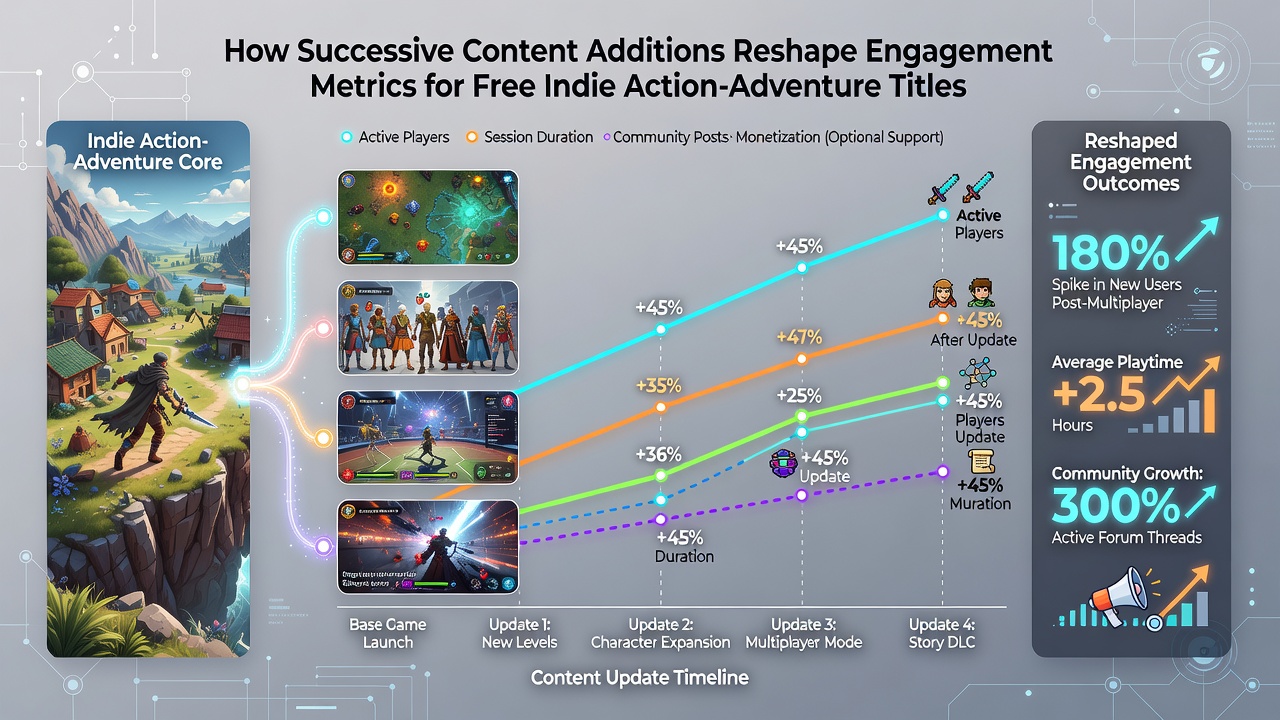
Long-Term Metric Stabilization
After the initial series of additions, engagement metrics tend to plateau unless developers introduce structural changes such as new game-plus modes or community-driven level editors. A 2026 working paper from the University of Melbourne's Games and Interaction Lab tracked twelve free indie action-adventure projects and found that titles reaching a fourth content cycle maintained weekly active user counts within a narrower variance band than those that stopped after two updates. The stabilization effect appears tied to predictable release cadences rather than the absolute size of each addition.
Platform algorithms also respond to sustained activity signals. Steam's discovery queue surfaces titles more frequently once review velocity and playtime graphs show consistent upward movement following each scheduled release, creating a feedback loop that further influences organic reach.
Conclusion
Successive content additions produce measurable, recurring adjustments to engagement metrics across free indie action-adventure titles on desktop platforms. Retention, session duration, and regional download patterns shift in alignment with release timing and the nature of each update, while long-term stabilization occurs when cycles remain consistent. Data from multiple international sources confirm these relationships without attributing causation to any single factor beyond the documented release sequences themselves.