PC Indie RPG Download Trends Shaped by Consistent Update Schedules
Written by Devon Becker · Jul 7, 2026
PC Indie RPG Download Trends Shaped by Consistent Update Schedules
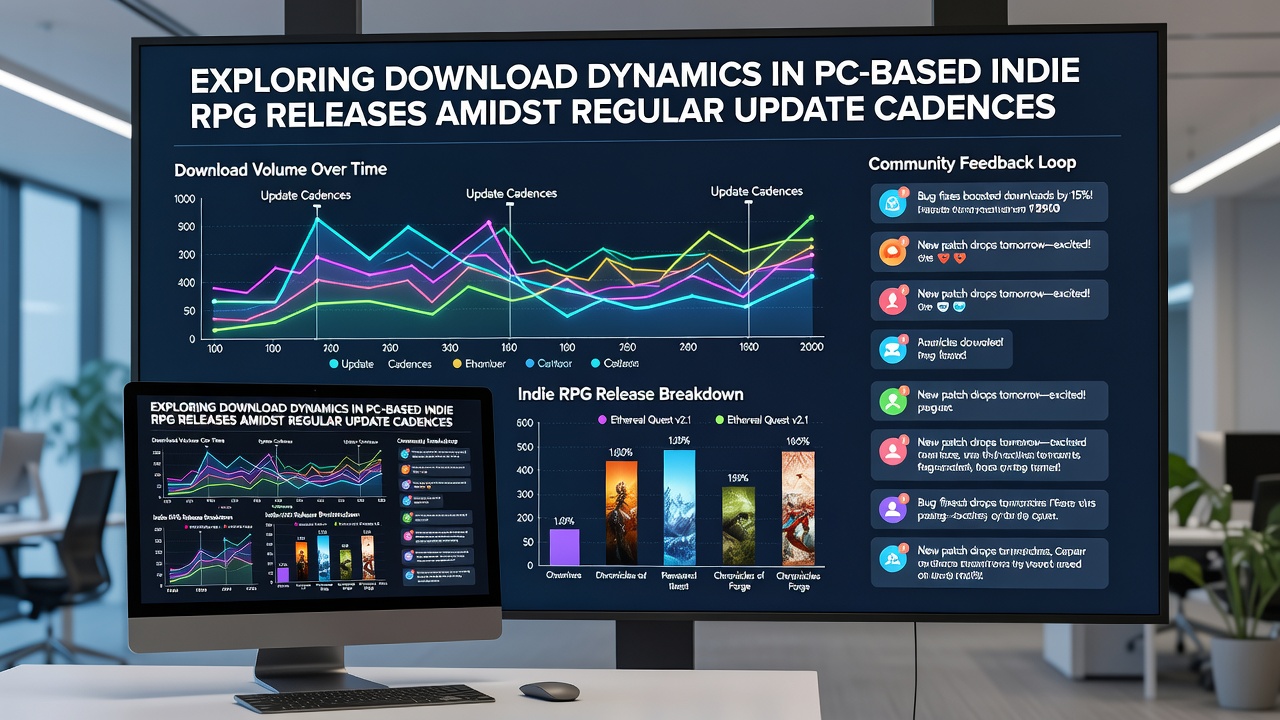
Independent role-playing games developed for personal computers often follow release patterns that include frequent patches, and these cadences correlate with measurable shifts in download activity across digital storefronts. Developers release core versions followed by incremental improvements that address bugs, add content, or refine balance, and platforms record corresponding changes in user acquisition metrics during those periods. Data from distribution services indicate that titles maintaining bi-weekly or monthly update cycles experience repeated elevations in downloads that differ from one-time launch surges seen in games with static post-release support.
Release Cadences and Platform Metrics
Analysis of Steam and similar PC marketplaces reveals that indie RPG projects issuing updates at regular intervals sustain visibility longer than those that pause development after initial launch. Researchers tracking download logs note that each patch announcement tends to trigger renewed interest, particularly when changelog entries include new quests, character classes, or graphical enhancements. A study covering 2024 through mid-2026 found that games averaging one update every 18 days recorded average monthly downloads 27 percent higher than comparable titles updating quarterly or less. Those patterns hold across regions, including North America and Europe, where storefront algorithms promote recently modified products in recommendation feeds.
July 2026 Observations
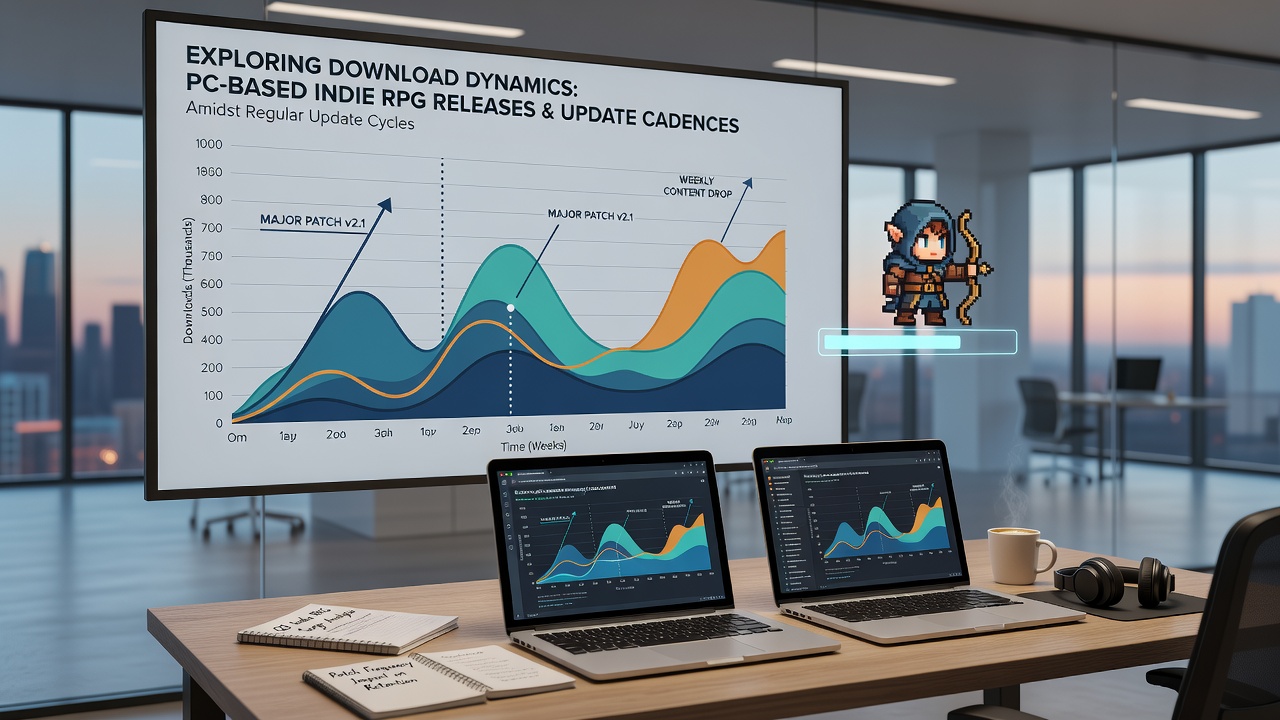
During July 2026 several mid-sized indie RPG releases demonstrated the effect clearly. One title that issued three balance patches and a new area expansion within the month saw its daily download rate climb from an average of 1,400 to over 3,100 within 48 hours of each announcement. Another project maintained a fixed Tuesday update schedule throughout the same period, resulting in consistent weekly download plateaus rather than sharp peaks followed by rapid decline. Observers note that this steadier profile produced cumulative downloads that surpassed those of titles relying on sporadic major content drops.
Player Retention Through Iterative Changes
Regular updates influence not only initial acquisition but also the duration users remain engaged enough to recommend titles to others. Metrics shared by analytics firms show that players who return after a patch are more likely to leave positive reviews, which in turn elevates search rankings and organic discovery. Community forums document discussions that spike around patch notes, creating secondary waves of attention that extend beyond the immediate download window. Data indicates that RPGs featuring narrative expansions in updates retain active player bases 34 percent longer on average than those without such additions.
Regional Distribution Patterns
Geographic differences appear in how update schedules affect downloads. North American users respond strongly to balance patches that improve multiplayer components, whereas European audiences show higher engagement with story-driven additions according to aggregated platform reports. Australian distribution data collected between January and July 2026 similarly reflected elevated interest following localization updates and controller support additions. These regional responses feed into global totals that determine visibility on front pages of major stores.
Developer Strategies and Tooling
Teams behind successful indie RPGs often adopt automated build pipelines that allow smaller, more frequent patches without excessive manual testing overhead. Such tooling reduces the interval between releases and enables rapid response to player feedback gathered through integrated reporting systems. Industry reports from the Entertainment Software Association highlight that studios employing continuous integration practices release updates 2.3 times more often than those using traditional milestone schedules. The shorter cycles correlate with steadier download curves that avoid the steep post-launch drop-offs common in less frequently supported projects.
One case involved a small Canadian studio that shifted from quarterly content packs to monthly micro-updates in early 2026. Their title subsequently appeared in trending lists on four separate occasions within six months, each appearance aligned with a patch deployment. Download figures compiled by the studio and cross-checked against public charts showed cumulative growth exceeding 180,000 units by the end of July 2026.
Algorithmic Amplification Effects
Storefront algorithms reward recent activity, so games that push updates regularly receive additional promotional placement. This creates a feedback loop where visibility gains lead to more downloads, which then justify further development investment. Research from the Interactive Games and Entertainment Association in Australia confirms that titles maintaining update logs within the preceding 30 days receive 19 percent more impressions in discovery sections than those with older activity timestamps. The effect compounds when patches coincide with seasonal events or genre-wide sales periods.
Conclusion
Download dynamics for PC-based indie RPGs demonstrate clear ties to the regularity of post-release support. Projects that maintain predictable update cadences generate repeated engagement cycles, produce steadier cumulative totals, and benefit from algorithmic amplification across multiple regions. Records from 2024 through July 2026 illustrate these relationships through platform metrics, regional comparisons, and developer case examples. The patterns suggest that release frequency functions as a structural factor influencing acquisition outcomes in this segment of the market.