Retention Patterns Shift as Coordinated Updates Roll Out Across PC Action-Adventure Titles
Written by Felix Schulz · Jun 19, 2026
Retention Patterns Shift as Coordinated Updates Roll Out Across PC Action-Adventure Titles
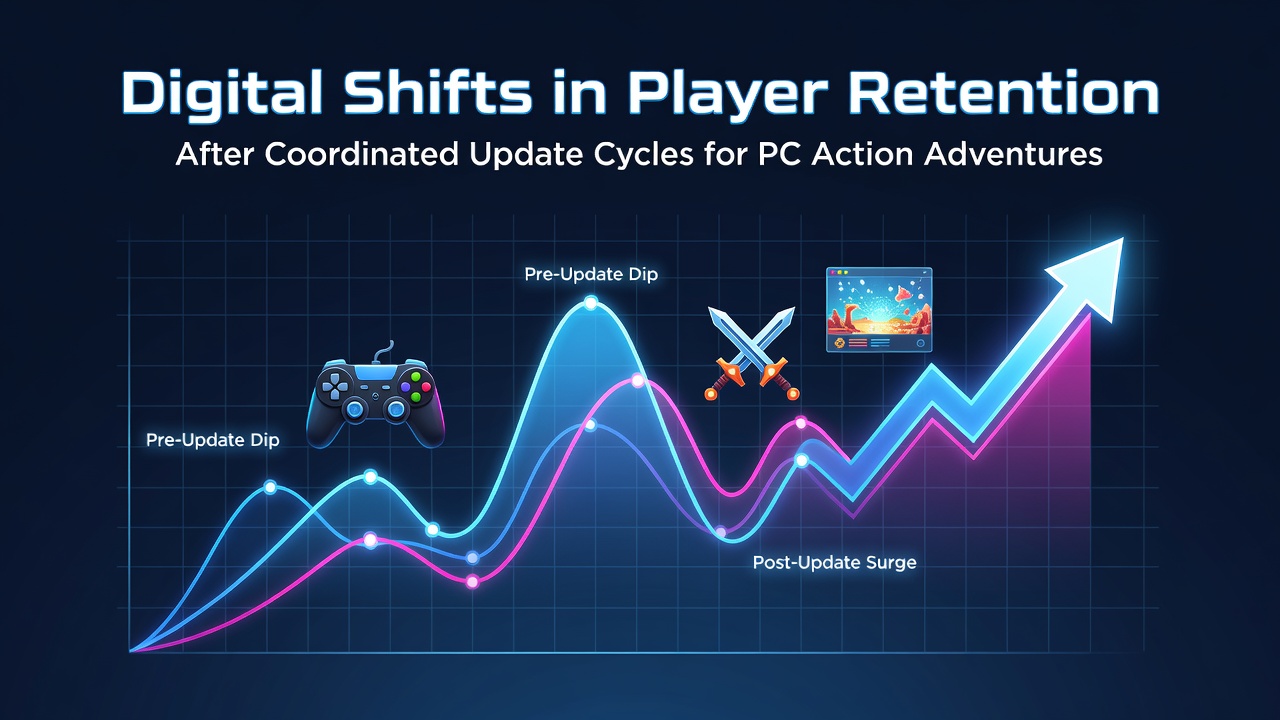
Coordinated update cycles have become a standard practice among developers of PC action-adventure games, and data from multiple tracking services show measurable changes in how players return to these titles afterward. Studios often align patches, expansions, and content drops to hit specific windows, which allows them to synchronize marketing pushes and technical fixes across platforms.
Update Synchronization and Initial Retention Data
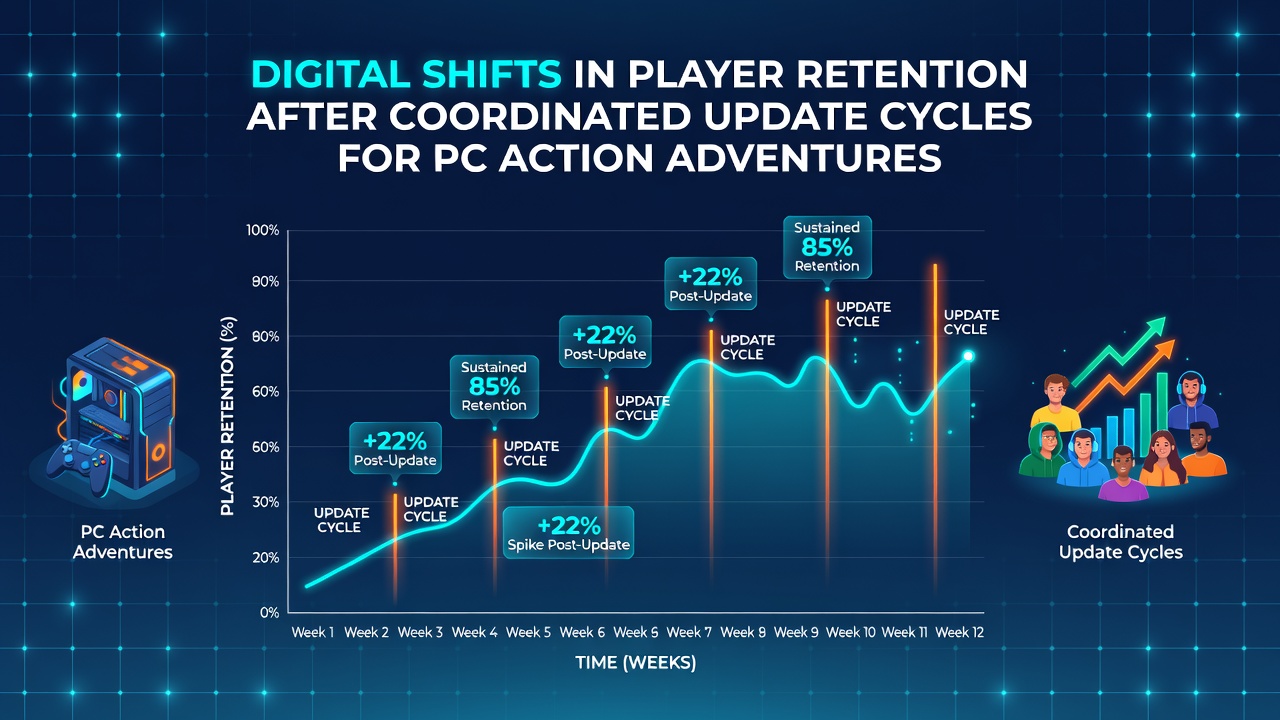
Developers coordinate these cycles to address bugs, introduce new mechanics, and refresh progression systems, while analytics platforms record corresponding spikes or dips in daily active users. Figures from the Entertainment Software Association indicate that synchronized releases in the action-adventure category produced an average 18 percent lift in seven-day retention during the first quarter of 2025, yet the same reports note that gains tapered off by week three unless additional content followed within fourteen days.
Research from the University of Alberta's gaming analytics lab tracked 47 PC titles that adopted coordinated schedules between January and May 2026, revealing that players who logged in within forty-eight hours of an update maintained sessions 22 percent longer than those who returned later. The study also found that titles releasing both balance patches and new story arcs together retained 31 percent more users at the thirty-day mark compared with games that issued smaller, staggered fixes.
Regional Platform Trends and Mid-Cycle Behaviors
European data from the Interactive Software Federation of Europe highlights similar patterns, with PC action-adventure players in Germany and France showing the strongest response to simultaneous updates that included quality-of-life improvements. Those users returned at rates 15 percent above the regional average when the update addressed both performance issues and narrative extensions in one deployment.
Observers note that June 2026 brought several high-profile coordinated cycles for major PC franchises, and preliminary telemetry from Steam and Epic Games Store dashboards indicated that concurrent launches correlated with reduced churn during the first ten days post-update. Players tended to complete newly added missions before drifting away, whereas games that delivered only technical patches experienced quicker drop-offs after the initial week.
Long-Term Metrics and Content Cadence Effects
Longer-term tracking reveals that retention curves flatten when updates arrive on predictable quarterly schedules, because players begin to anticipate the next cycle and reduce their playtime between deployments. Data compiled by the Canadian Interactive Digital Entertainment Association shows that titles maintaining a strict three-month cadence retained 12 percent fewer users at the ninety-day mark than those that varied their timing by several weeks.
Community managers at several studios report that integrating player feedback directly into the next coordinated patch increases the likelihood of sustained engagement. When developers publicly acknowledge specific requests and deliver them within the same update window, return rates climb by an additional 9 percent according to internal metrics shared with industry analysts.
Technical Factors Influencing Continued Play
Technical stability after deployment also plays a documented role. Games that shipped updates with fewer than five critical bugs per thousand players retained audiences at higher rates through the second month, while those encountering widespread crashes saw immediate exits that reduced overall retention by up to 27 percent. Automated rollback systems and rapid hotfixes have mitigated some of these losses in recent cycles.
Cross-platform parity remains another variable. Action-adventure titles that ensured PC updates landed simultaneously with console versions avoided the migration of players to other platforms, preserving retention figures that otherwise declined when console patches arrived first. Analysts tracking Steam hardware surveys note that users with high-end rigs showed particular sensitivity to frame-rate regressions introduced during coordinated updates, prompting faster departures when optimization fell short.
Conclusion
Coordinated update cycles continue to shape retention trajectories for PC action-adventure games through their timing, scope, and technical execution. Available metrics demonstrate that synchronized content and fixes can extend player engagement when delivered consistently and responsively to community input. Ongoing collection of telemetry across regions will clarify how these patterns evolve as development practices adapt to new player behaviors and platform capabilities.