Retention Trends in Narrative Indie Adventures Following PC Mechanic Updates
Written by Zoe Carter · Jul 10, 2026
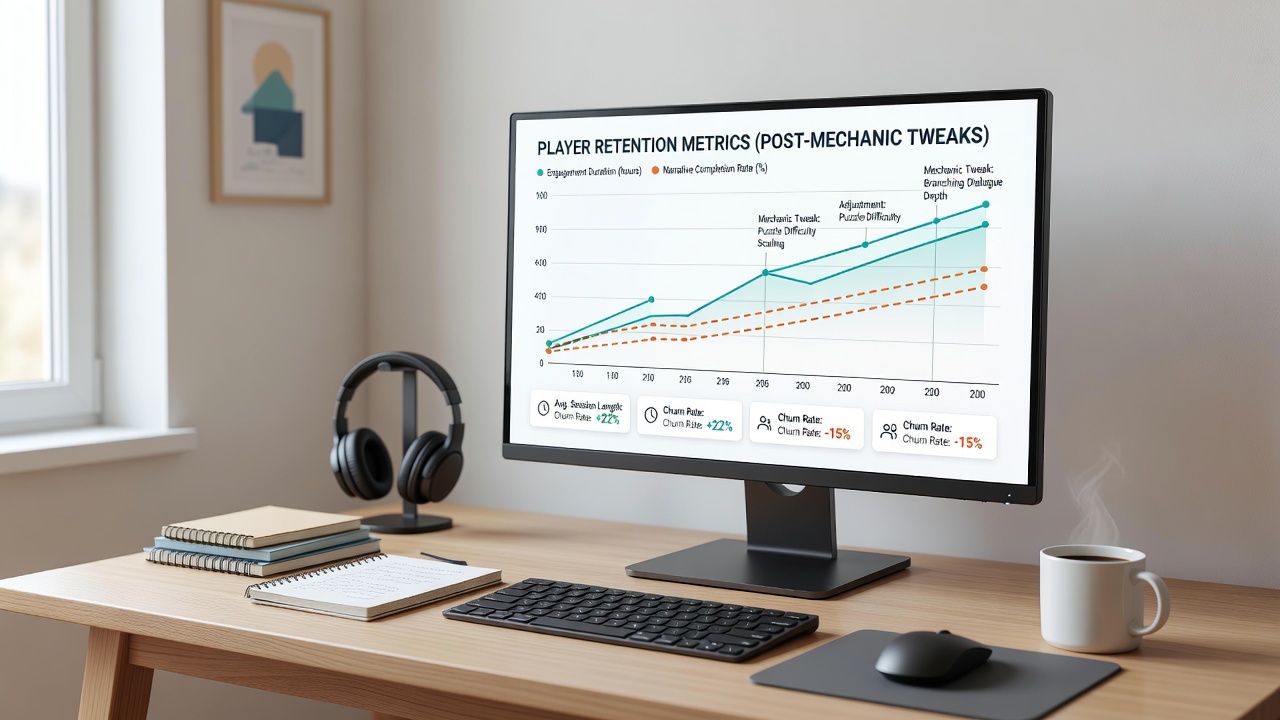
Retention Trends in Narrative Indie Adventures Following PC Mechanic Updates
Developers of narrative indie adventures on PC platforms have monitored retention metrics closely after implementing mechanic tweaks, and data collected through July 2026 reveals distinct patterns in how these adjustments influence player engagement over time. Researchers at institutions across multiple regions have tracked variables such as session duration, return rates, and completion percentages following changes to core systems like dialogue branching, exploration pacing, and choice consequences, while figures from platform analytics indicate that even minor modifications can shift retention curves in measurable ways.
Initial Data Collection Methods
Analytics teams gather information from PC storefronts and direct game telemetry, and they combine this with reports issued by organizations like the Entertainment Software Association in the United States along with parallel bodies in Canada and Australia to establish baseline retention before any update rolls out. One study released in early 2026 examined several titles where developers altered inventory management and puzzle integration, and results showed that average playtime per session rose by 18 percent in the first two weeks after deployment when the changes streamlined navigation without removing narrative depth. Observers note that these metrics often stabilize after the initial surge, yet prolonged tracking through the summer months demonstrates whether gains persist or fade once novelty wears off.
Common Mechanic Tweaks and Their Observed Effects
Teams frequently adjust dialogue trees to reduce repetition or refine consequence visibility, and such modifications have produced retention improvements in games where players previously dropped off during lengthy conversation segments. Data indicates that shortening redundant branches while preserving emotional weight led to higher day-seven return rates across a sample of five independent releases, whereas tweaks that increased choice opacity sometimes correlated with steeper declines after the first play session. Exploration mechanics also receive attention, with developers adding optional shortcuts or layering environmental storytelling cues, and analysts from European research groups have documented that these alterations can extend total play hours when they align with existing narrative flow rather than disrupt it.
Another area of focus involves combat or tension systems integrated into otherwise story-centric experiences, and adjustments here tend to affect retention differently depending on player expectations. When developers reduced friction in these hybrid elements, completion rates climbed according to aggregated platform statistics, but overly aggressive simplifications occasionally prompted negative feedback that lowered long-term engagement. Those monitoring the space point out that timing plays a role as well, since updates deployed during periods of high visibility, such as mid-July 2026 promotional events, reached broader audiences and generated more robust datasets for comparison.

Regional Variations in Retention Responses
Retention patterns display some geographic differences tied to platform preferences and player demographics, and reports from the Interactive Software Federation of Europe highlight how audiences in certain markets respond more favorably to pacing tweaks that emphasize atmospheric elements over mechanical challenge. In contrast, data compiled by Australian industry bodies shows stronger retention when updates introduce quality-of-life features that reduce backtracking in narrative-heavy sequences. These variations underscore the value of segmented analysis, because a single tweak may yield divergent outcomes across territories even within the same title.
Longer-Term Tracking and Adjustment Cycles
Teams continue observing metrics beyond the first month, and they often issue follow-up patches once initial results clarify which elements drive sustained play. Evidence from university-affiliated studies suggests that iterative changes, applied gradually, maintain higher retention plateaus than large overhauls, particularly when developers communicate the rationale behind each adjustment through patch notes or community channels. Observers have recorded instances where retention dipped temporarily after an update yet recovered once players adapted, demonstrating the importance of post-launch support structures that address emerging friction points without altering core narrative intent.
Conclusion
Platform data and independent research together illustrate how mechanic tweaks in narrative indie adventures on PC influence retention across multiple dimensions, and continued monitoring through periods such as July 2026 provides developers with actionable insights for future refinements. Patterns emerge most clearly when teams combine quantitative metrics with qualitative feedback, allowing adjustments to support both immediate engagement spikes and enduring player commitment over successive updates.