Subtle Mechanic Evolutions in Indie Titles Emerge Through Layered Free Releases
Written by Zoe Carter · May 26, 2026
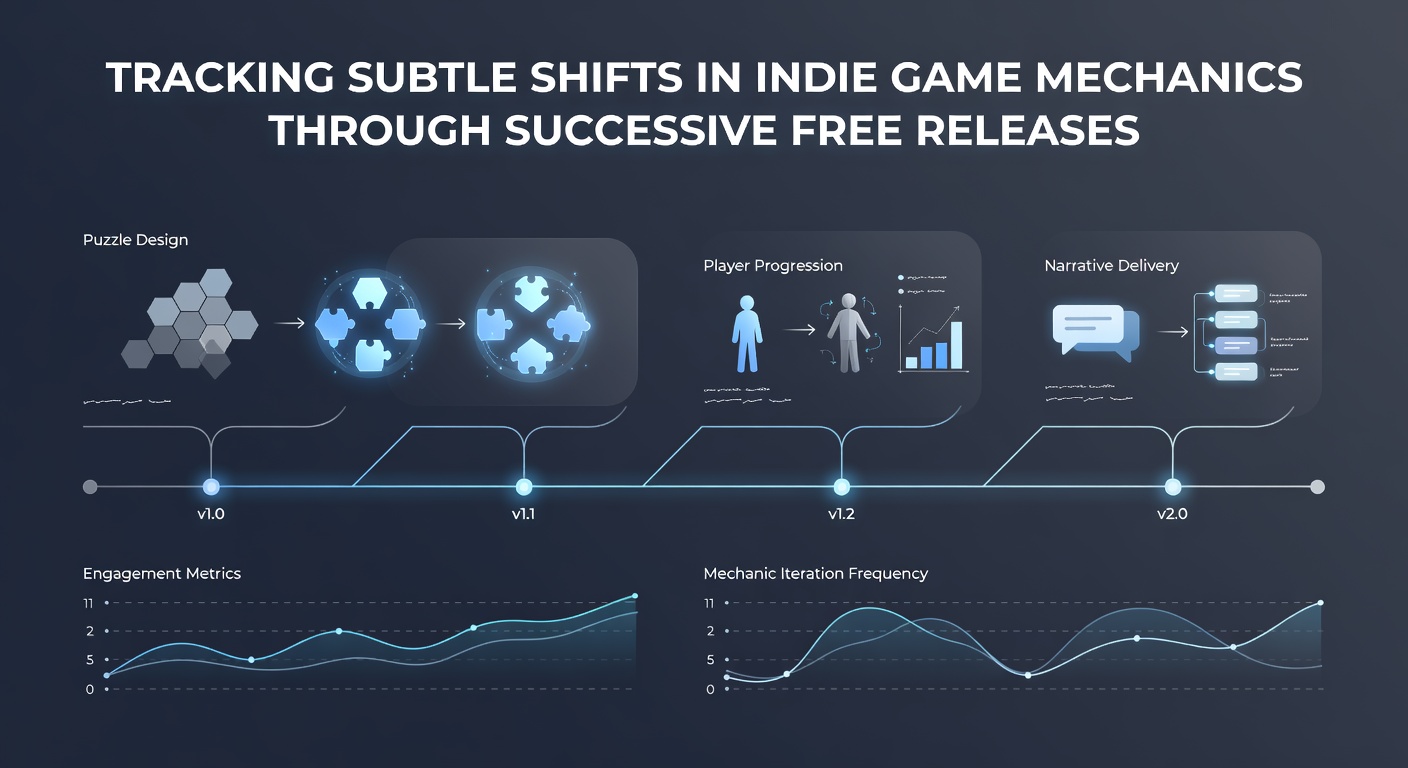
Subtle Mechanic Evolutions in Indie Titles Emerge Through Layered Free Releases
Indie developers often distribute free iterations of their titles to gather feedback and refine core systems, and observers note that these successive releases produce measurable adjustments in gameplay mechanics over time. Data from industry tracking services shows that many action-adventure and RPG projects follow this pattern, with changes appearing in movement systems, resource management, and combat pacing across versions released months apart.
Patterns in Release Sequences
Developers release an initial free build that establishes baseline rules, then issue follow-up versions incorporating player data while keeping the core loop intact. According to reports compiled by the Entertainment Software Association, free PC indie downloads in the RPG category increased by 18 percent between 2023 and 2025, and a portion of those titles displayed iterative tweaks rather than wholesale redesigns. One pattern involves tightening inventory weight limits in early free builds, followed by the introduction of modular equipment slots in later updates that reward experimentation without altering overall progression speed.
Another recurring adjustment appears in enemy AI timing. Early free releases often feature predictable patrol routes, yet subsequent versions introduce variable reaction windows based on player position data collected during open testing periods. These modifications emerge gradually because developers prioritize stability across successive drops rather than overhauling systems at once.
Examples from Recent Titles
Take one action-adventure project that began as a free prototype in late 2024. Its first public build emphasized simple jump arcs and basic ledge grabbing, yet the second free iteration six months later added mid-air directional influence that allowed players to correct trajectory during falls. By the third release cycle in early 2026, developers introduced stamina-gated wall climbs that interacted with the existing jump system, creating layered navigation challenges without requiring new assets.
Similar sequences appear in several RPGs where free versions expand dialogue trees incrementally. Initial releases limit conversation branches to core quest paths, while later builds add conditional responses tied to previously collected items, and the shift becomes visible only when players compare save files across versions. Researchers at the University of Alberta documented these incremental expansions in a 2025 study of 47 indie RPGs distributed through free channels.
Measurement Approaches
Those who analyze version histories rely on patch notes, community spreadsheets, and frame-by-frame comparison tools to isolate changes. Figures from the European Games Developer Federation indicate that 62 percent of surveyed indie teams use free releases as primary testing vehicles, and the resulting data sets reveal small numeric shifts such as a 0.2-second reduction in dash cooldowns or a 5 percent increase in enemy detection radius. These adjustments accumulate across releases, producing noticeably different feel by the time a title reaches its paid milestone.
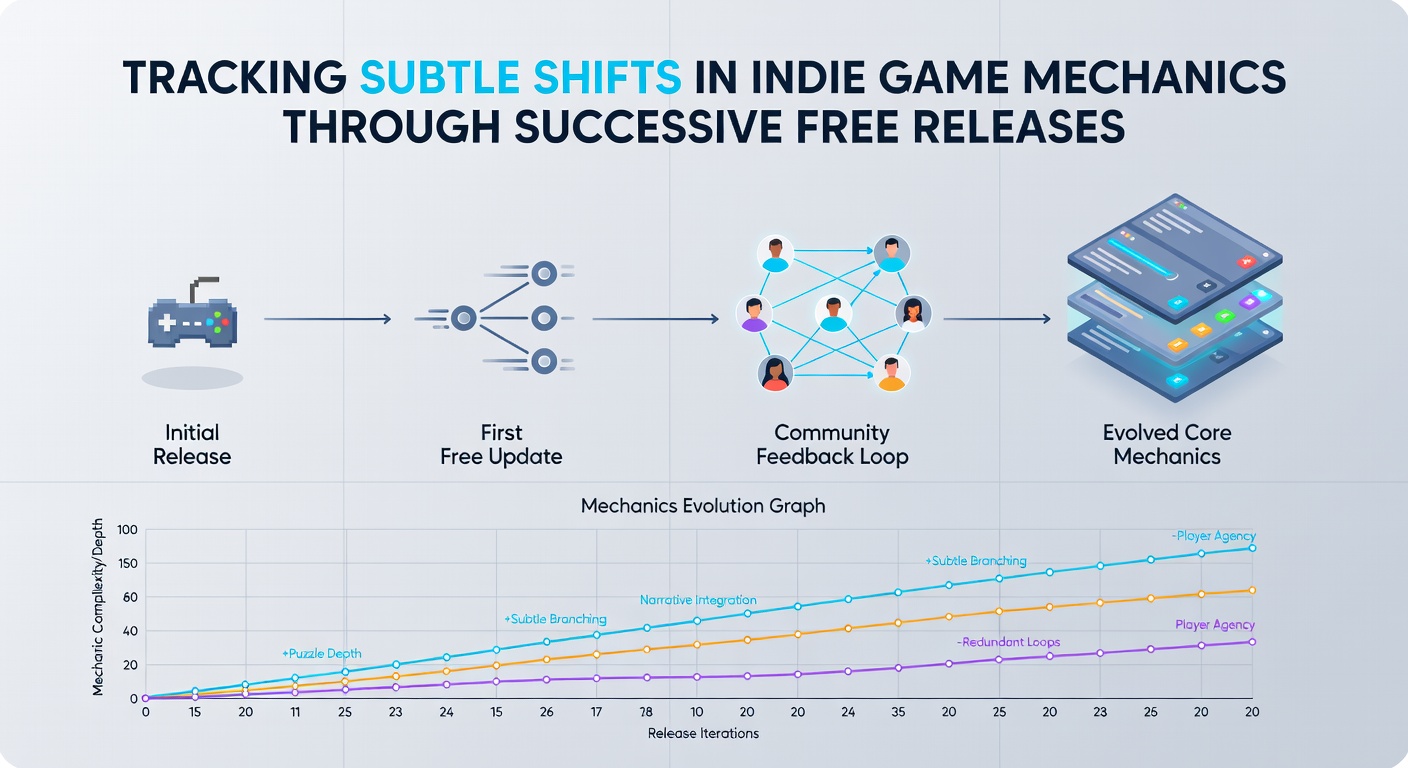
Tracking tools now parse save data automatically to highlight differences in resource curves or encounter density. One case involved a title whose free updates gradually lowered the frequency of healing item spawns while simultaneously increasing the effectiveness of crafted alternatives, shifting player behavior from hoarding to active crafting without any single patch announcing the direction.
Regional Distribution Trends
Free release practices vary by region yet follow comparable mechanic evolution paths. Canadian and Australian indie teams often time successive drops around major digital storefront events, whereas EU-based developers align releases with academic conference schedules that attract researcher attention. As of May 2026, several titles originating from North American studios had completed four free iterations within 14 months, each adding one new interaction layer to an existing system such as stealth detection or dialogue reputation tracking.
External data sets from the Interactive Games and Entertainment Association further illustrate that free-to-play conversion rates for indie RPGs rose when developers documented mechanic changes transparently between releases. Players who compared versions reported clearer understanding of intended design goals, which in turn influenced retention metrics tracked by storefront analytics.
Conclusion
Successive free releases function as an observable laboratory for indie mechanic refinement, and the cumulative effect of small, documented adjustments becomes measurable when version histories are examined side by side. Industry reports and academic reviews continue to catalog these patterns, providing concrete evidence of how developers iterate on movement, combat, and progression systems without requiring paid updates at each step.